As a senior mechanical engineer with years of experience in structural projects, I have always been fascinated by bridges. They are not just functional structures. They are massive achievements of human engineering. Whenever we need to connect two landmasses, cross a river, or pass over a busy highway, we rely on precise calculations and strong materials.
In the world of modern construction, two materials usually dominate the conversation. These are structural steel and reinforced concrete cement (RCC). Both materials have transformed how we build infrastructure. However, they serve very different purposes depending on the project requirements.
In this article, I want to walk you through the different types of steel bridges used today. After that, we will compare steel bridges and RCC bridges by looking closely at their advantages and disadvantages.
Why Do Engineers Choose Steel?
Before we look at the specific designs, it helps to understand why steel is such a popular choice. Steel has a very high strength to weight ratio. This means it can support massive loads without being overly heavy itself. It also has excellent elasticity. When heavy trucks drive over a steel structure, the metal can bend slightly and return to its original shape without breaking. This flexibility is a huge benefit for long span lengths.
Main Types of Steel Bridges
When you study bridge engineering, you quickly learn that form follows function. The design we choose depends entirely on the distance we need to cover and the weight the structure must carry. Here are the most common types of steel bridges we use in the industry.
1. Steel Beam Bridges
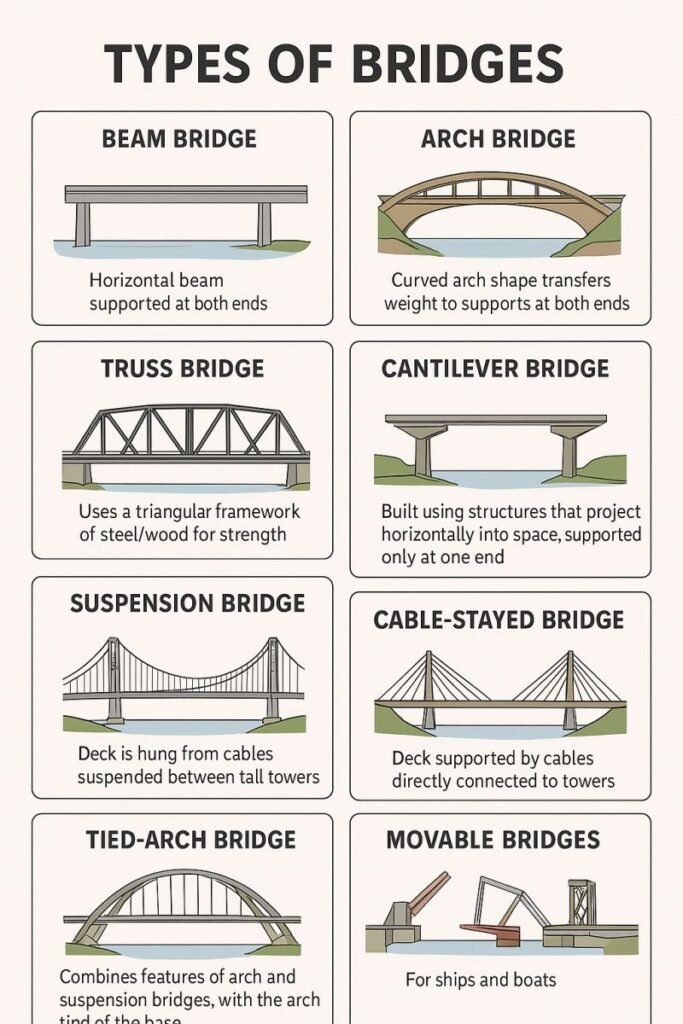
The beam bridge is the simplest and oldest type of bridge design. In a steel beam bridge, heavy steel girders rest on top of supporting piers. The weight of the traffic pushes straight down on the beams.
Because the design is so simple, these bridges are very fast to build. However, they are generally limited to shorter span lengths. If a beam bridge gets too long, the steel in the middle will start to sag under its own dead load. To cover longer distances, engineers have to place multiple supports in the water or across the land below.
2. Steel Truss Bridges
If you have ever seen a bridge made of connecting steel triangles, you were looking at a truss bridge. As an engineer, I love the truss design. The triangle is naturally the most rigid geometric shape.
In a steel truss bridge, the connected triangles distribute the heavy weight of trains or cars across the entire framework. Some parts of the bridge experience tension (being pulled apart) while other parts experience compression (being pushed together). Truss bridges can carry incredibly heavy loads, which is why they have historically been the top choice for heavy railroad crossings.
3. Steel Arch Bridges
The arch bridge is a beautiful and highly efficient design. Instead of pushing weight straight down like a beam bridge, an arch bridge carries the load outward along the curve of the arch and down into the solid ground supports on either side.
Steel is perfect for this design because it can be manufactured in precise curves and segments. We often use steel arch bridges when crossing deep valleys or wide rivers where we cannot easily build support piers in the middle.
4. Suspension Bridges
When we need to cross massive bodies of water, we turn to the suspension bridge. The Golden Gate Bridge is a famous example. In this design, tall steel towers are built on concrete piers. Huge main cables are strung over the top of these towers. Smaller vertical cables then hang down from the main cables to hold up the steel deck where the cars drive.
Suspension bridges are engineering marvels. They can span distances of thousands of feet because the steel cables are incredibly strong under tension.
5. Cable-Stayed Bridges
Cable-stayed bridges look similar to suspension bridges, but they work differently. Instead of having a main draping cable, a cable-stayed bridge has cables that run straight from the tall central tower directly to the bridge deck.
It looks somewhat like a giant fan. This design has become very popular in recent decades for medium to long spans. It uses less steel cable than a traditional suspension bridge and provides excellent stability against wind and traffic vibrations.
If you are planning an infrastructure project or just want to see how high quality fabrication comes together, you should look into professional manufacturers. You can explore excellent examples of engineered steel bridges to see how these different types are built for real world applications.
Steel Bridges vs RCC Bridges: A Detailed Comparison
Now that we know how steel structures work, let us compare them to the other giant of the construction world. Reinforced concrete cement (RCC) is concrete poured around a cage of steel rebar. Both steel and RCC are excellent, but they each have distinct pros and cons.
Advantages of Steel Bridges
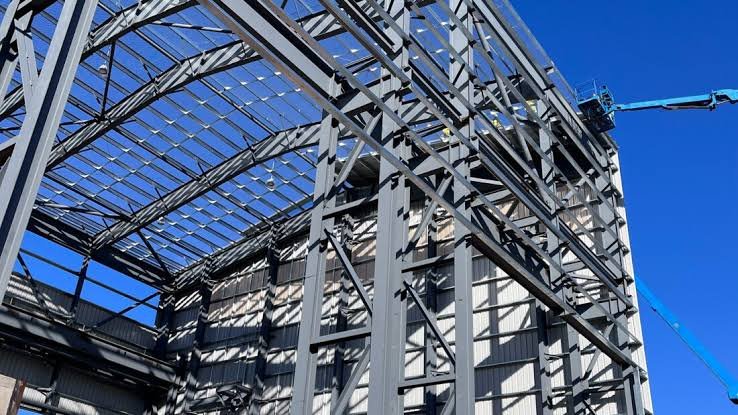
- Faster Construction Time: Steel components are manufactured in a factory to exact specifications. When they arrive at the construction site, they just need to be bolted or welded together. This makes the assembly process very fast.
- Longer Span Lengths: Because steel is much lighter than concrete but very strong, it is the only real option for massive crossings. RCC simply becomes too heavy to support itself over very long distances.
- Easy to Repair and Modify: If a steel beam gets damaged, we can often unbolt it and replace it. We can also reinforce an existing steel bridge by welding extra steel plates onto it to increase its load-bearing capacity.
- High Scrap Value: When a steel bridge reaches the end of its life, the material is fully recyclable. The scrap metal has high value, which offsets some of the initial costs.
Disadvantages of Steel Bridges
- Risk of Corrosion: This is the biggest enemy of steel. If exposed to water and oxygen, bare steel will rust. To prevent this, steel bridges require regular maintenance, including painting and protective coatings.
- Higher Initial Cost: The raw material cost of structural steel is generally higher than the raw materials needed for concrete.
- Fatigue Over Time: Because steel flexes, repeated heavy traffic can eventually cause metal fatigue. Engineers have to inspect the connections and welds regularly to catch tiny cracks before they grow.
Advantages of RCC Bridges
- Low Maintenance: Once reinforced concrete cures, it requires very little upkeep. It does not rust or require frequent painting like steel does.
- Excellent Compressive Strength: Concrete is incredibly hard to crush. When combined with the tensile strength of the inner steel rebar, an RCC bridge forms a very solid, immovable structure.
- Less Vibration: RCC bridges have a huge amount of mass. This heavy dead weight means the bridge will not shake or vibrate much when large trucks drive over it.
- Malleability During Construction: Wet concrete can be poured into any shape you want. This gives architects a lot of freedom to create smooth curves or unique pillar designs.
Disadvantages of RCC Bridges
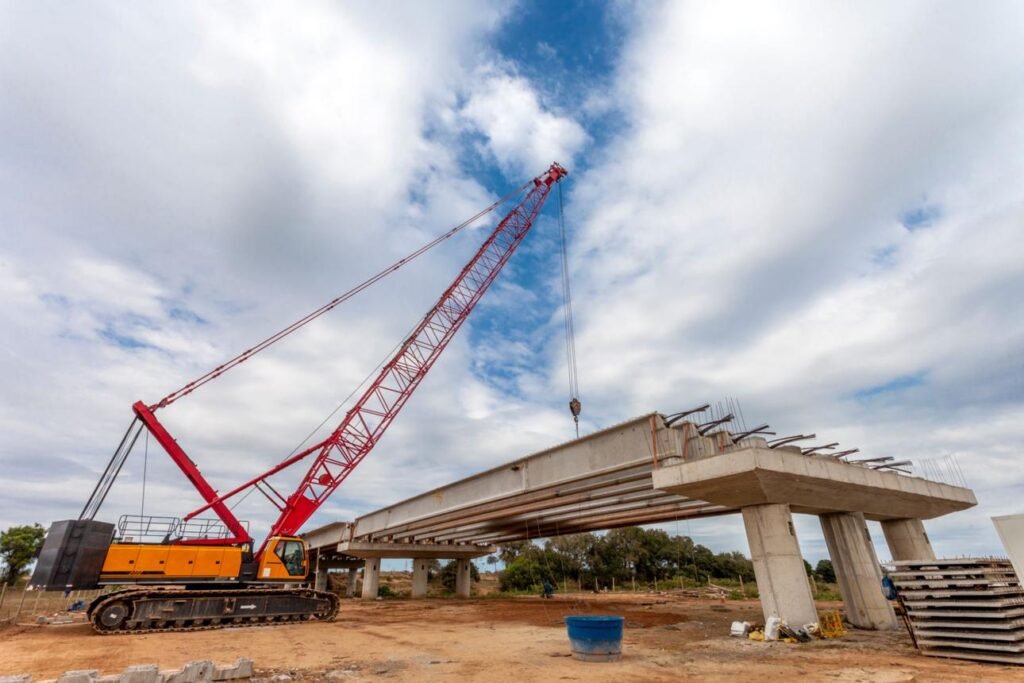
- Slow Construction Speed: Building an RCC bridge takes a lot of time. You have to build wooden or metal forms, tie the steel rebar, pour the wet concrete, and then wait days or weeks for it to cure before it gains full strength.
- Heavy Dead Load: Concrete is extremely heavy. A large portion of an RCC bridge’s strength is used up just holding its own weight. This is why RCC is not suitable for extreme span lengths.
- Difficult to Inspect and Repair: If the steel rebar inside the concrete starts to rust, it expands and cracks the concrete from the inside. This is hard to detect early and very difficult to fix once the damage is done.
Which is Better: Steel or RCC?
As a mechanical engineer, I am often asked which material is better. The truth is that neither is universally better. The choice depends entirely on the specific project.
If we need to build a short overpass on a highway with a tight budget and want low maintenance for the next fifty years, an RCC bridge is usually the smartest choice.
However, if we need to cross a wide river, if we need to build the structure very quickly to minimize traffic disruption, or if we are building in an earthquake zone where flexibility is required, steel is the clear winner.
Conclusion
Bridge construction is a perfect blend of material science and physics. Understanding the different types of steel bridges from simple beam structures to complex cable-stayed designs helps us appreciate the infrastructure we use every day.
Both steel and reinforced concrete cement have their rightful place in modern engineering. By carefully weighing the advantages and disadvantages of each material, engineers can ensure that our roads and railways remain safe, efficient, and reliable for generations to come.